



Featured Resource

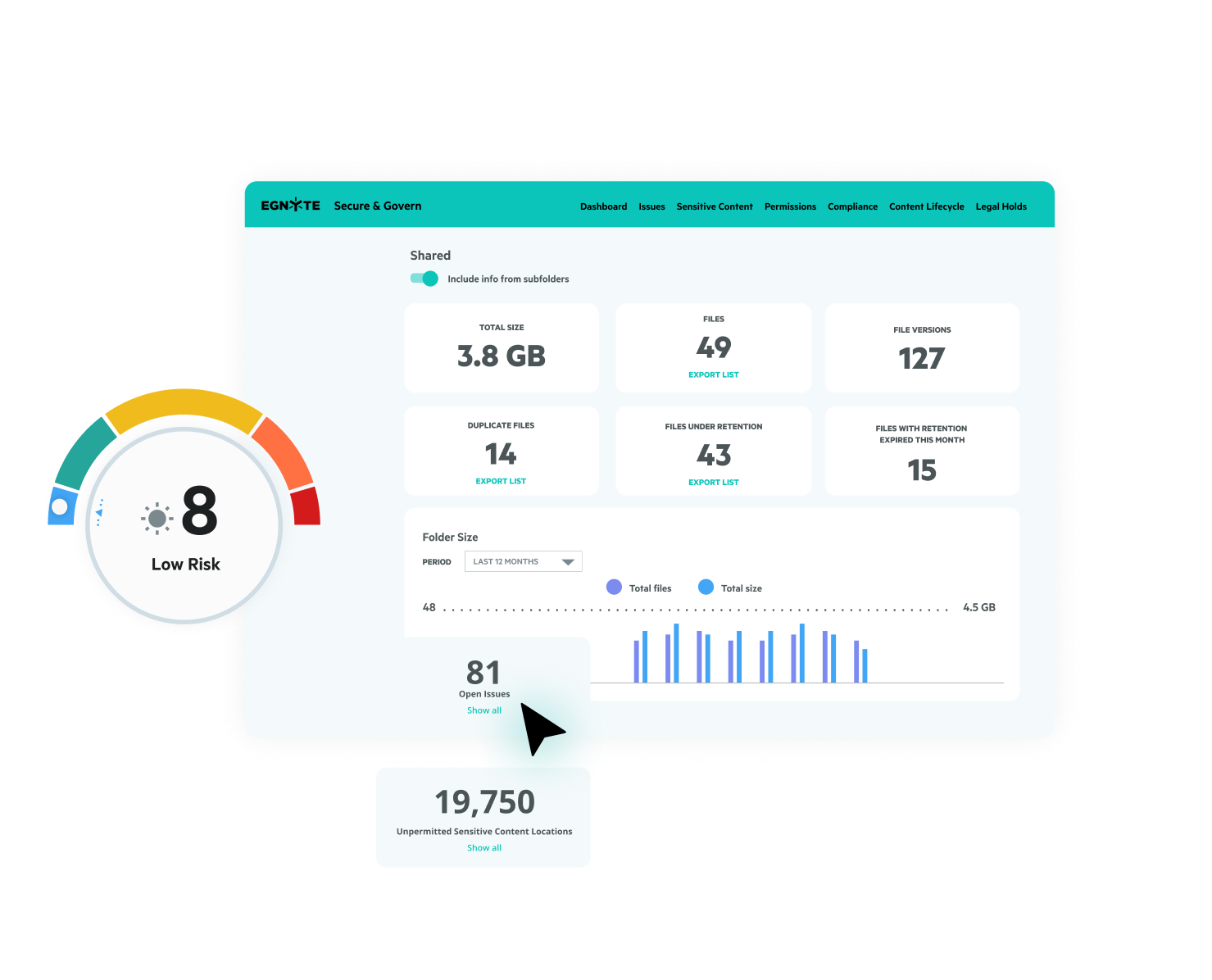









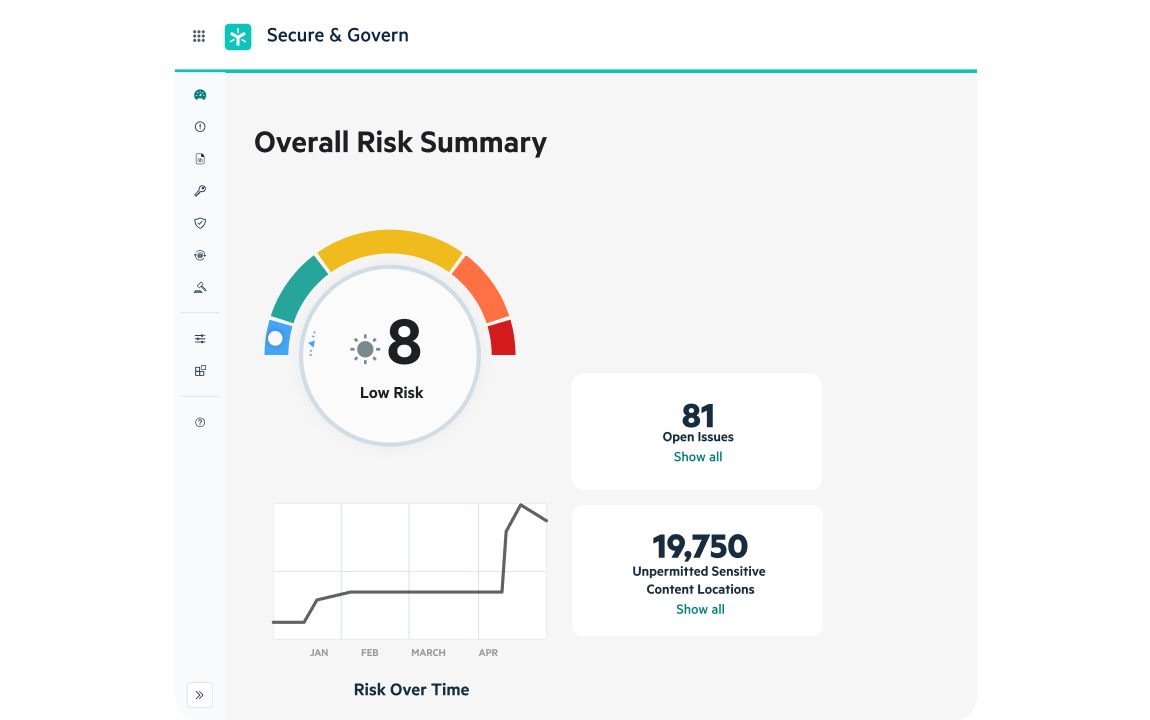
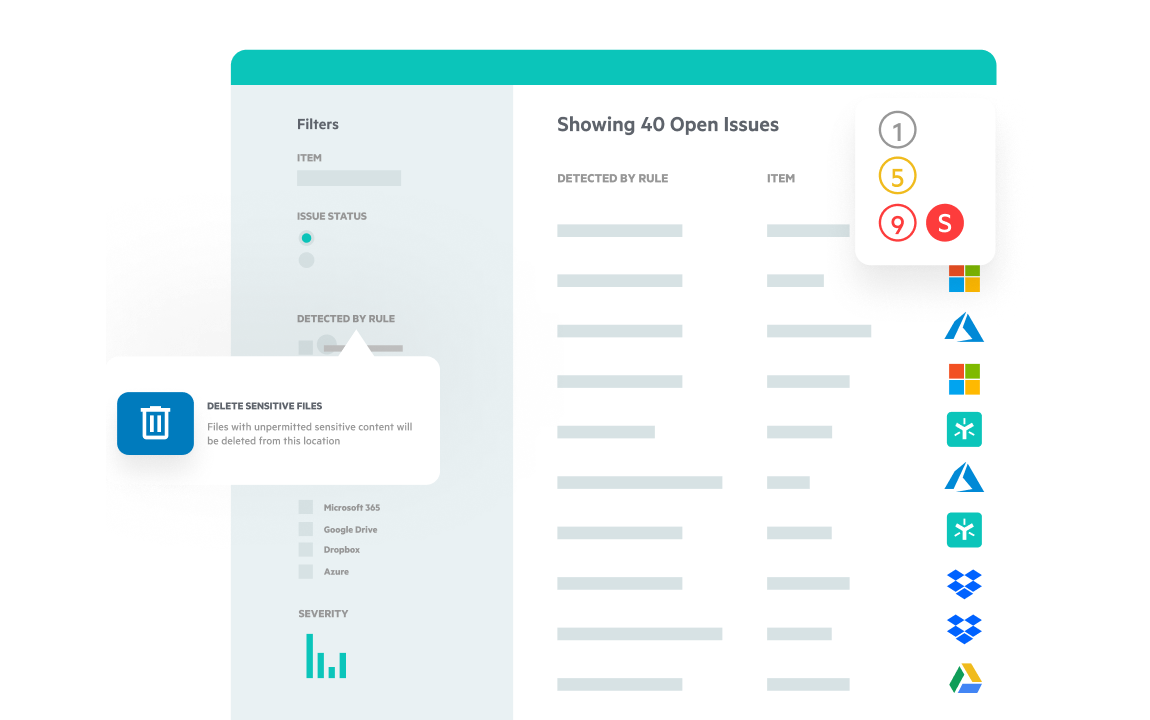
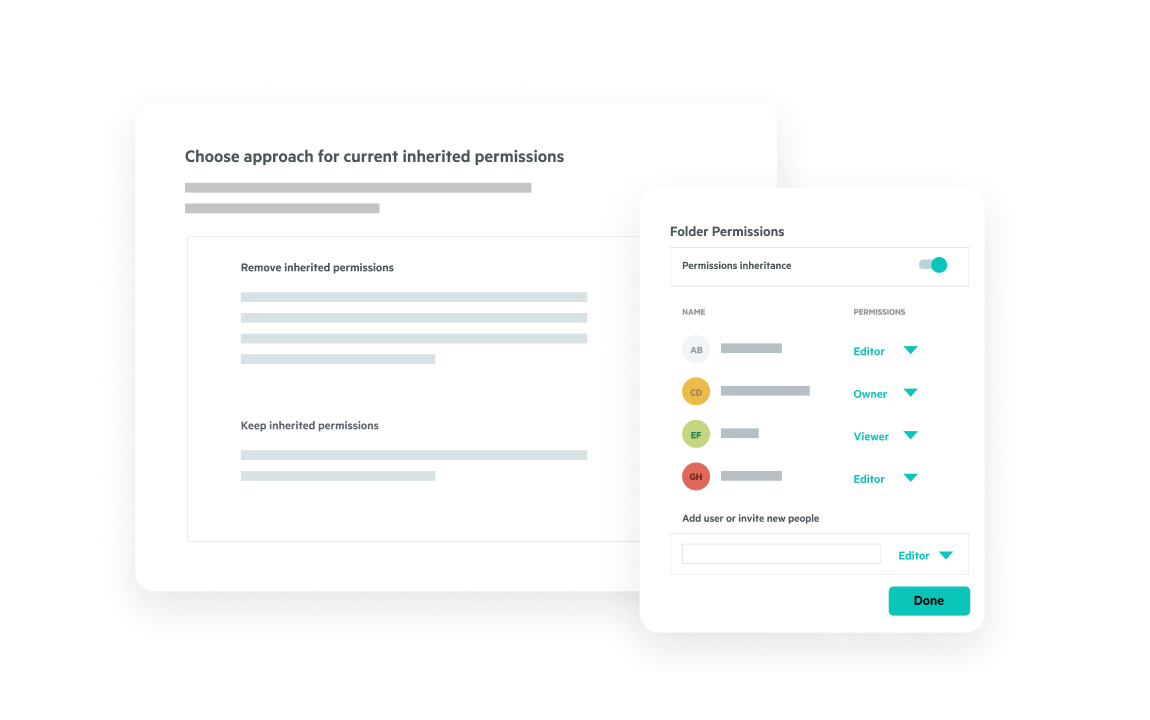
Limit users’ file access based on “business need to know” and reduce your ransomware attack footprint. Use classification patterns to locate and classify sensitive files, enabling comprehensive protection. Minimize access paths to sensitive data in advance to further reduce exposure.
Use signature-based detection to scan folders and flag files with patterns commonly associated with ransomware. Identify previously unknown ransomware variants through behavioral analytics, and access continuously updated, cloud-based protection, without the overhead that results from maintaining it yourself.
Accelerate incident investigation and simplify recovery with a detailed audit trail of compromised users, files, and sensitive data. Restore your environment to a snapshot taken just before the attack to recover more rapidly and minimize disruption.
Rely on the latest advances in data protection and ransomware detection, backed by Egnyte’s dedicated team of experts. Leverage proprietary, AI-powered models purpose-built to detect ransomware and identify early signs of data encryption.
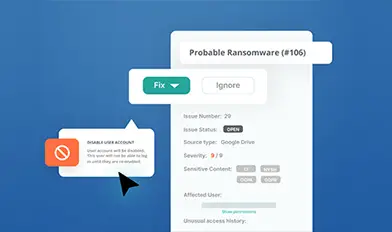
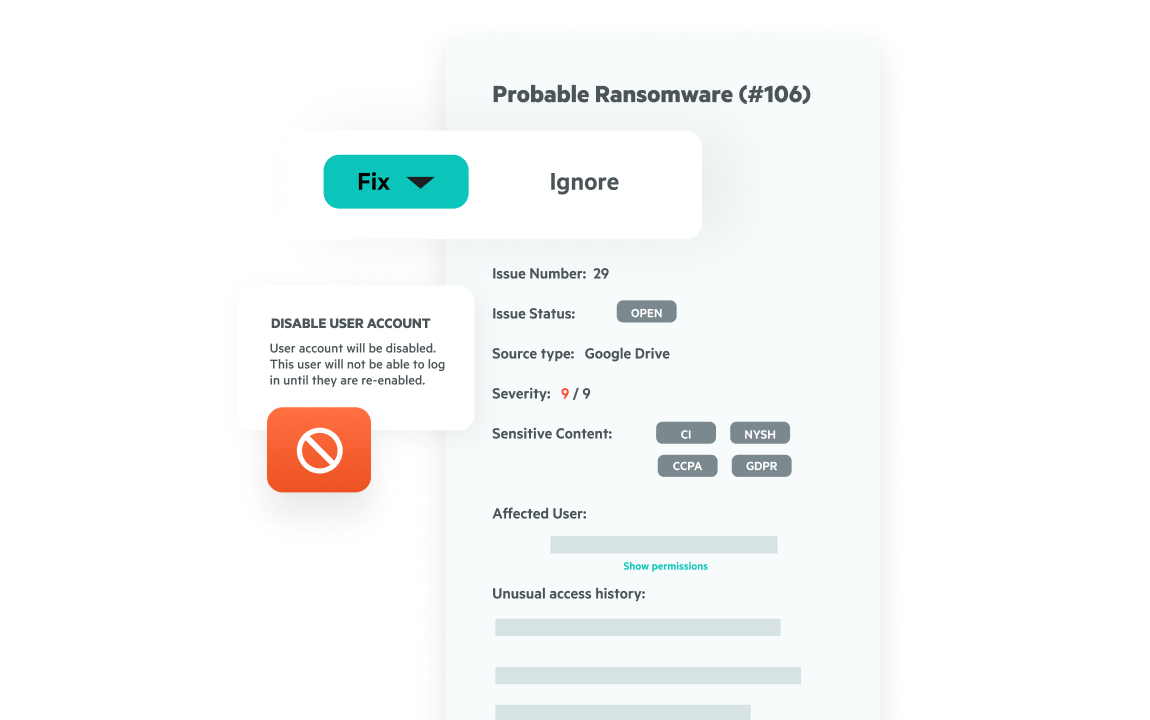
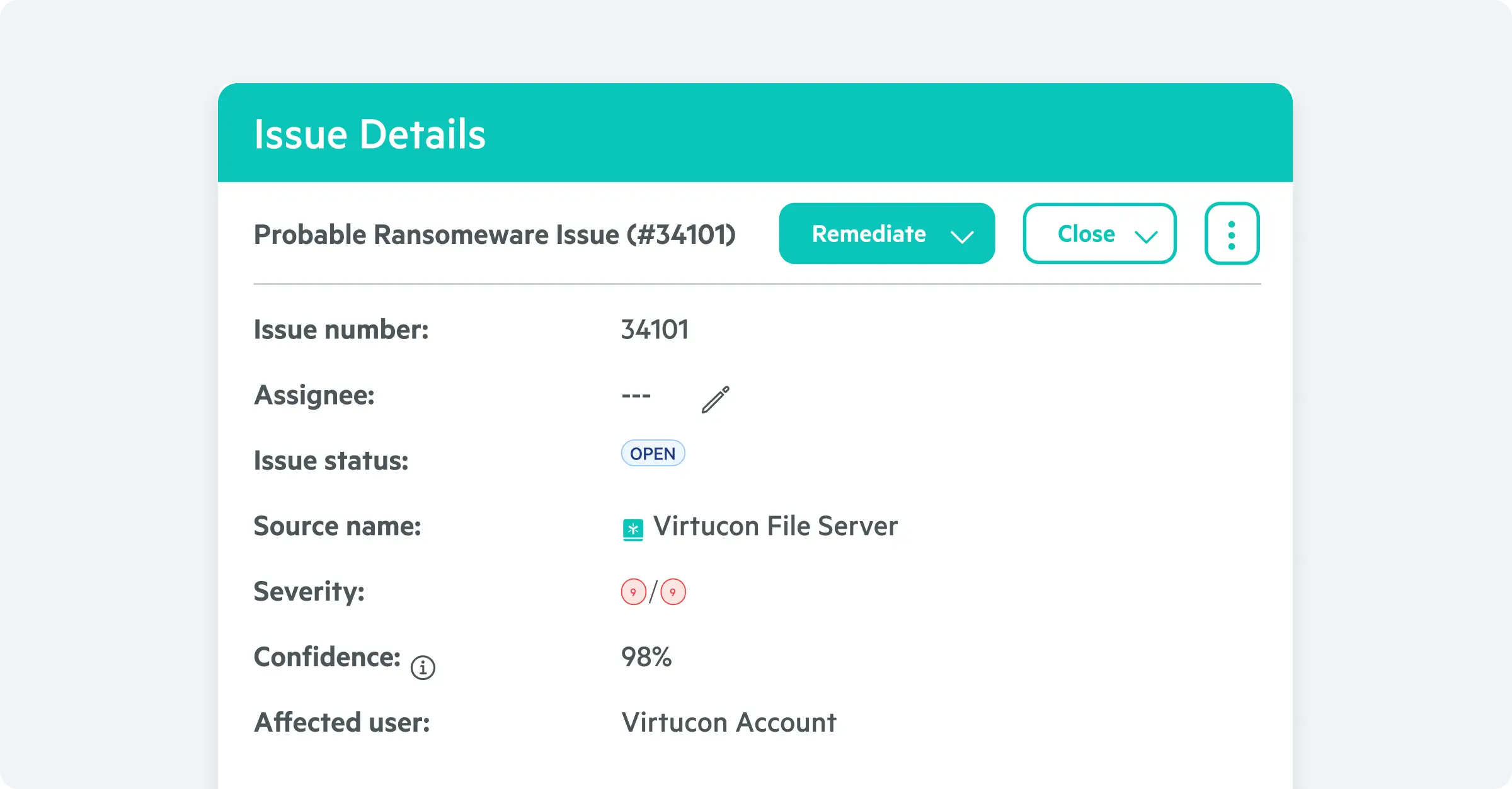
Protect against ransomware by identifying impacted users and taking immediate action to prevent attacks from spreading.

“My team loves Egnyte. They love the granularity, they love the control, and they love that it makes data migration so easy. Egnyte is definitely up there with the best modern cloud applications.”

“If someone moves or deletes a large number of files, or if there’s a ransomware signal, our security team gets a notification. Those alerts automatically feed into our help desk ticketing system so the team can track and investigate.”
Want to see what Egnyte has for your organization?
Ransomware Protection is part of Egnyte’s governance platform.
Enhance data protection with these complementary products.
Have more questions? Contact Sales to get the answer you’re looking for.
Yes, there’s a strong correlation between users clicking on phishing emails and the initiation of successful ransomware attacks. For that reason, companies should conduct regular cybersecurity awareness training for all of their users and utilize proven ransomware detection tools like Egnyte.
The 3-2-1 Rule for data backup dictates that there should be a minimum of three copies of important data, on at least two different media types, with at least one of those copies stored off-site. In addition, experts recommend that at least one copy of the backup be intentionally kept offline and inaccessible from your network. By following such an approach, an immutable copy of your backups will be available, even if an attacker gains administrative privileges, to fast-track ransomware recovery.
An effective threat intelligence program for ransomware detection and prevention consolidates threat indicators from diverse sources, eliminates duplicates, and filters noise to prioritize real threats. It provides security operations teams with clear response recommendations, automates identification of new threats, generates alerts, shares intelligence seamlessly with existing security solutions, and identifies gaps across systems and processes.
7 data recovery refers to comprehensive data recovery software that enables companies to recover mission-critical files under nearly any condition. Egnyte refers to this capability as snapshot ransomware recovery. Watch this video to learn more.
The five steps for ransomware recovery include:
Although virtual private networks (VPNs) can be useful when you’re accessing a network from a high-risk location like an airplane or a public coffee shop, they were never designed for ransomware identification. Instead, you should consider a ransomware detection and removal solution like Egnyte.
The three main ransomware detection types are:
Egnyte supports all three of those detection types.
Although the exact cause of a ransomware infection differs from attack to attack, the primary cause of ransomware infection is human error. Specifically, many ransomware attacks result from users clicking on phishing emails. For that reason, it’s important to conduct ongoing cybersecurity awareness training for all of your users. Learn more about preventing phishing attacks in this article.
Ready to improve productivity? Egnyte’s AI-powered cloud enhances collaboration, automates workflows, and secures your mission-critical content.